Roasted vs raw pistachios: which should you choose?
Walk into any nut shop and you will find pistachios raw, roasted and salted, and sometimes roasted with saffron. They come from the same trees and the same harvest, yet they taste, crunch and work in the kitchen quite differently. This guide explains what each one really is, what roasting changes and what it doesn't, and which to pick for snacking, hosting, baking or a gift.
What raw pistachios are
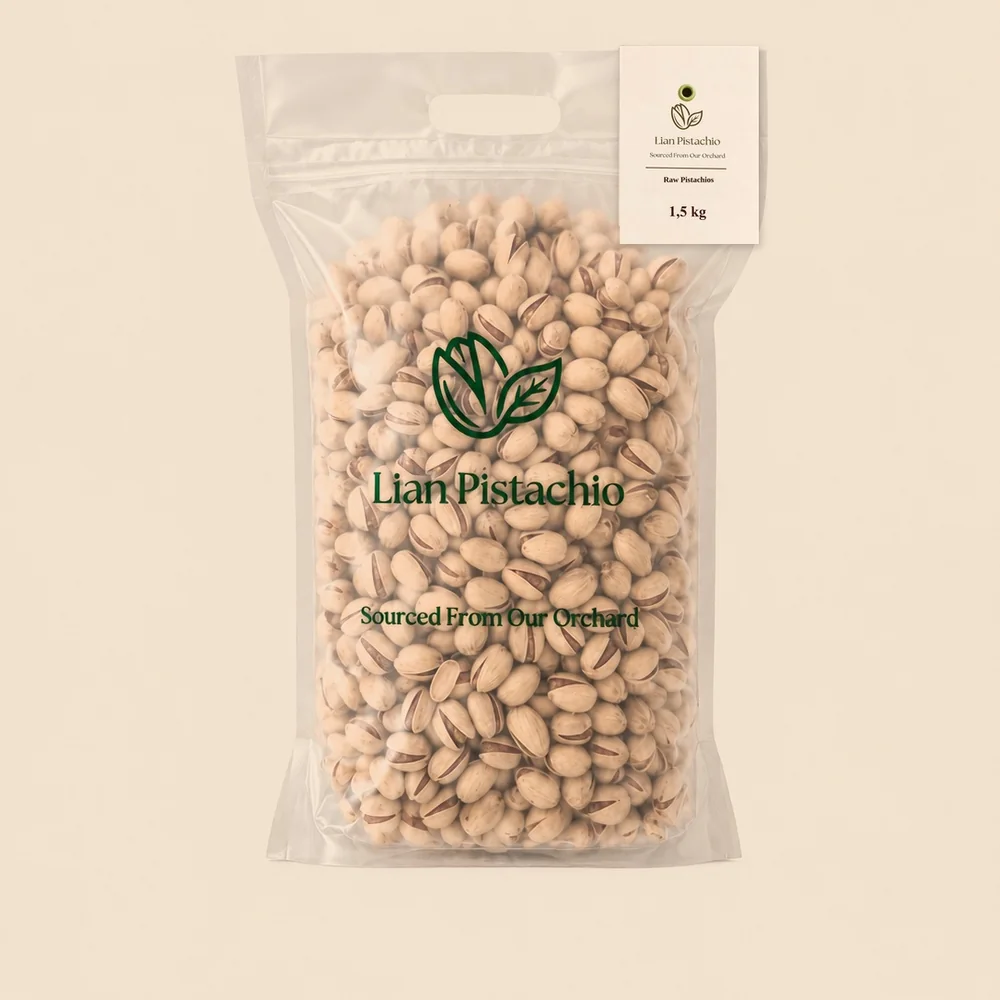
Raw pistachios are nuts that have been harvested, hulled and dried, but not roasted. On our orchard in Iran they are hand-picked, hulled within hours of picking and then sun-dried until their moisture falls to 5–7%. That drying is what makes them crisp and keeps them stable; no heat beyond the sun is used. Raw pistachios have a mild, sweet, slightly buttery taste, a firm bite and a kernel that keeps its natural green and purple colours.
What roasting changes
Roasting gently heats the dried nuts in hot air. The heat browns the surface of the kernel and develops the deep, toasty aroma most people associate with a bowl of pistachios on the table. The nut also becomes crunchier and more brittle. For roasted and salted pistachios the nuts are soaked in brine before roasting, so a thin layer of salt stays on the shell and reaches the kernel through the open split. Saffron pistachios are roasted with saffron, which adds a golden colour and a floral, warm flavour on top of the roast.
Taste and texture side by side
- Raw: mild, sweet and fresh; firm and slightly creamy; the kernel keeps its bright green colour.
- Roasted & salted: bold, toasty and savoury; very crunchy; the classic snack and hosting nut.
- Roasted with saffron: aromatic and golden, with a gentle saffron note; our signature product and a favourite for special occasions.
- Lightly roasted without salt: rich and nutty with no added sodium; easy to make at home from raw nuts.
Nutrition: what stays the same
Roasting does not turn pistachios into a different food. Protein, fibre, healthy fats and most minerals stay almost the same, because dry roasting adds no oil. Studies on nuts show that heat can lower some heat-sensitive vitamins and antioxidants a little, and the loss grows with higher temperatures and longer roasting; light roasting keeps most of them. The biggest nutritional difference is salt: roasted and salted pistachios contain added sodium, while raw pistachios contain almost none. If you are watching your salt intake, raw or unsalted roasted nuts are the simple choice.
Which one for which use
- Everyday snacking and movie nights: roasted & salted, for the full crunch and flavour.
- Hosting guests and family gatherings: roasted & salted or saffron, served in the shell.
- Baking, desserts and cooking: raw, because the recipe will add its own heat and the colour stays greener.
- Homemade pistachio butter, pesto or smoothies: raw, or lightly roasted for a deeper flavour.
- Gifts for Yalda, New Year, Ramadan or Nowruz: saffron-roasted, or raw for people who prefer a clean, natural taste.
- A lower-salt diet: raw, or raw nuts roasted at home without salt.
How to roast raw pistachios at home
If you buy raw pistachios you can roast a small batch whenever you like. Spread the in-shell nuts in a single layer on a baking tray and roast them at 150–160 °C for about 8–12 minutes, shaking the tray halfway. They are ready when they smell toasty and the kernel turns a shade darker. For salted nuts, soak them for a few minutes in salted water first, drain well and roast a little longer until fully dry. Let them cool on the tray: pistachios keep crisping as they cool, and roasting too long makes them bitter.
Freshness and storage
Both raw and roasted pistachios keep best in an airtight container in a cool, dark, dry place. Raw nuts usually hold their fresh taste a little longer, because roasting makes the oils more exposed to air. Once you open a pack of roasted nuts, close it well and enjoy it within a few weeks; for longer storage, the fridge or freezer works for both. Our guide on storing pistachios has the full details.
Does the variety matter?
Yes. Kalleh Ghoochi is large and round with a rich flavour that shines both raw and roasted, which is why our retail packs are preferably Kalleh Ghoochi. Fandoghi is round and very uniform, so it roasts evenly and is a classic choice for roasting and salting. Whatever the variety, a high open-shell rate matters for roasted nuts, because salt and saffron flavour the kernel through the split; ours is 90–95%.
Order raw, roasted or saffron pistachios
We offer three in-shell pistachios: raw, roasted & salted, and roasted with saffron, each in 700 g and 1.5 kg packs. They are hand-picked, sun-dried and sorted with care by a family that has grown pistachios for half a century, and tested for aflatoxin in line with EU limits. Choose your favourite in our shop and order on WhatsApp; if you can't decide, a 700 g pack of each is an easy way to taste the difference.