
How to store pistachios and keep them fresh
Pistachios are rich in natural oils, which give them their flavour but also make them sensitive to heat, light, air and moisture. Stored well, they stay crisp and sweet for months. Here is how we store them, and how you can too.
Why storage matters
The oils in a pistachio slowly react with air, warmth and light. Over time this turns the flavour flat, then bitter or rancid. Moisture is the other enemy: it softens the crunch and, in warm places, can lead to mould. Good storage simply slows all of this down.
The four rules
- Airtight: a glass jar, a sealed tin or a zip bag with the air pressed out.
- Cool: away from the oven, the radiator and sunny windows.
- Dark: light speeds up the loss of flavour and colour.
- Dry: never store pistachios near the sink or the kettle, and always use a dry spoon.
Pantry, fridge or freezer?
In an airtight container in a cool, dark cupboard, pistachios keep their best flavour for a few months. In the fridge they stay fresh much longer, up to about a year, and the freezer keeps them even longer. Pistachios absorb smells, so in the fridge or freezer use a truly airtight container. Let them come back to room temperature before opening, so no condensation forms on the nuts.
In-shell or kernels?
The shell is natural protection, so in-shell pistachios keep longer than kernels. Shelled kernels have more surface exposed to air and go stale sooner: keep them sealed, and use the fridge if you will not finish them within a few weeks. This matters most for green kernels used in baklava and pastry, because heat and light also fade their bright colour.
Roasted, raw and pistachio butter
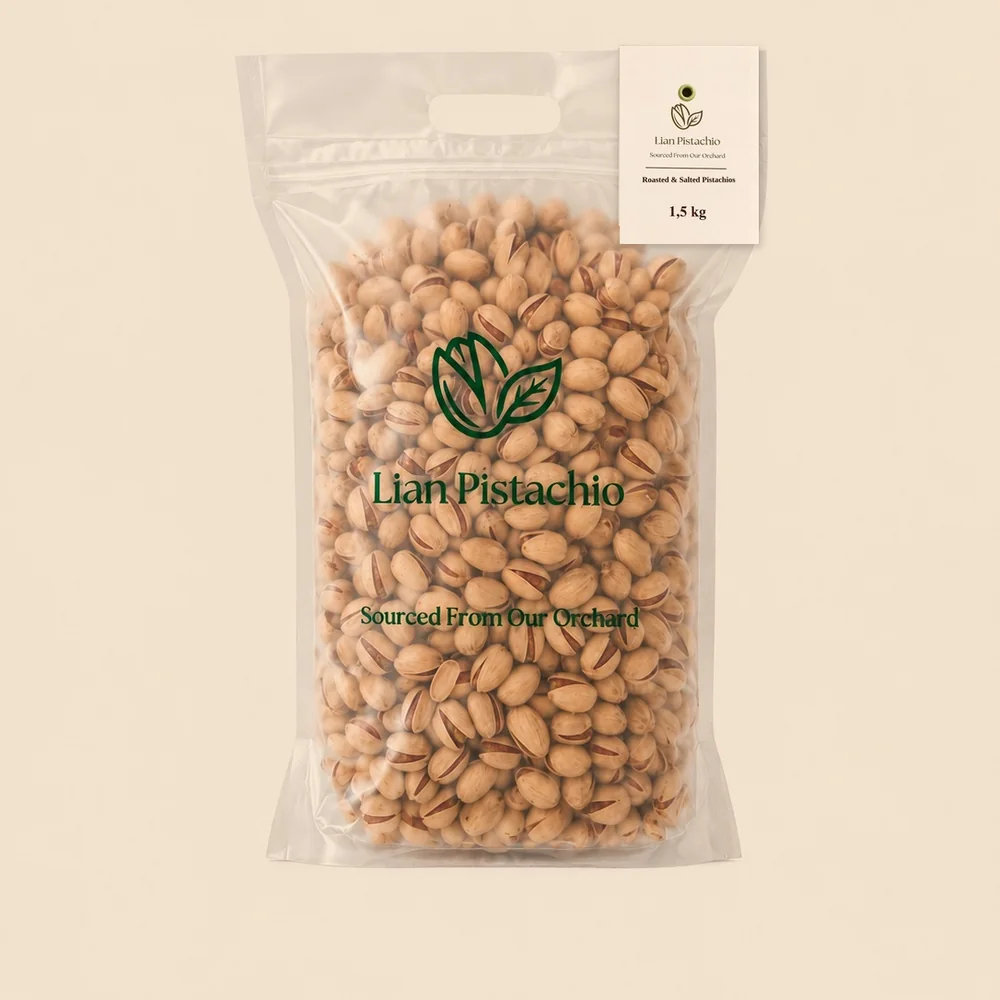
Roasted and salted pistachios are ready to eat but lose their crunch quickly once exposed to air, so close the bag after every use. Raw pistachios keep well when dry and sealed. Pure pistachio butter, with no added oil or sugar, may separate as the natural oil rises to the top; this is a sign it is pure. Simply stir it back in, keep the jar tightly closed, and refrigerate it after opening if you use it slowly.
How to tell pistachios have gone stale
- A musty, paint-like or bitter smell
- A soft or chewy texture instead of a crisp snap
- Dull, brownish kernels instead of green to yellow-green
- Any sign of mould: throw the whole batch away
For shops and pastry kitchens
Buy in quantities you can sell or use within a few months, and rotate stock so the oldest goes out first. Keep display jars away from sunny windows and spotlights, and refill them from sealed stock rather than topping up old nuts. For pastry, keep kernels sealed in the fridge and take out only what you need for the day. Our guide to pistachio quality explains what to check when a new lot arrives.