Why pistachio prices rose in 2026
In 2026, pistachio prices reached their highest level in eight years. Shops, bakeries and families all felt it. Here is what happened, what to expect next, and how to buy well while the market is tight.
Smaller crops in all three big origins
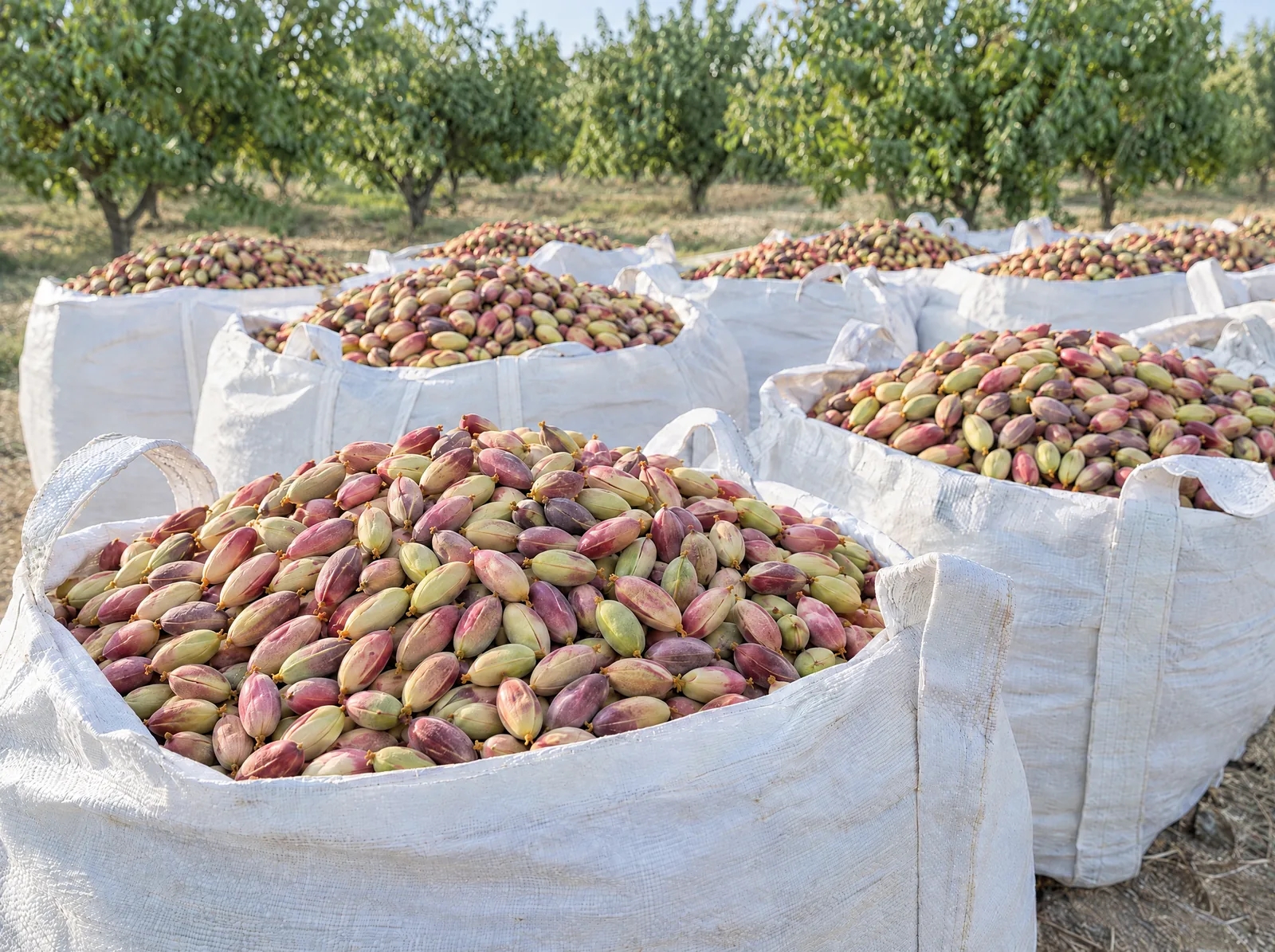
Almost all of the world's pistachios come from three countries: the United States, Iran and Türkiye. In 2026 all three had smaller harvests at the same time. Industry estimates put the 2026/27 world crop at roughly 600,000 to 700,000 tonnes, down from about 1.1 million tonnes the year before.
In California, a record heat wave in March disrupted flowering, and the crop is expected to fall from a record of about 720,000 tonnes to around 300,000 tonnes. Iran's crop is expected at about 115,000 to 130,000 tonnes after a dry year and a natural off-year for the trees. Türkiye's estimates range widely, from about 130,000 to 200,000 tonnes, still far below its 2024 record.
Demand kept growing
While supply shrank, demand did the opposite. The viral pistachio-filled chocolate from Dubai, pistachio creams, ice cream and new desserts from big brands pushed demand to new highs. Pistachio is now one of the most wanted flavours in confectionery, and bakers still need it for baklava, kadayıf and künefe.
Shipping and logistics
Disruption to shipping routes across the region in 2026 made moving nuts slower and more expensive, with higher freight and insurance costs. Overland routes kept trade moving, but in smaller volumes. These extra costs were added on top of the smaller crop.
What it means for Türkiye
Türkiye eats more pistachios than ever: about 4 kg per person in 2024, the highest in a decade. When the local crop is small, Türkiye relies on imports, and Iran is its largest supplier. In 2025, Iran supplied about 55% of the value of Türkiye's pistachio imports. Iran is the world's second-largest pistachio producer, with about a fifth of world production and a third of world exports.
Kernels for baklava were hit hardest: in 2025 their price in Türkiye roughly tripled in a year, and the government opened imports to help bring prices down.
What to expect next
Most market reports expect prices to stay firm through the 2026/27 season, because there is simply less to go around. For 2027, growers in California forecast a much larger crop, which could ease prices from late 2027 if the weather is kind. Until then, buyers who secure their supply early will be in the best position.
How to buy well in a tight market
- Buy as close to the source as you can. Fewer middlemen means a better price per kilo and a clear origin.
- Agree your volumes for several months, not week to week, so your supply is reserved.
- Be flexible on size grade. A 24–26 or 26–28 grade can give excellent value when the largest sizes are scarce.
- Check quality on every lot: open shells, moisture, kernel colour and freshness. Our pistachio quality guide explains how.
- Store what you buy well, so nothing is lost to staleness. Our storage guide shows how.
Where Lian stands
We grow, hand-pick, sun-dry and sort our own pistachios in Iran and supply them directly, in shell and as kernels, to families and businesses in Türkiye and across the region. If you need a steady supply this season, send us a message and we will share what is available.