Iranian vs Antep pistachios: what is the difference?
Both come from the same tree, and both are among the best pistachios in the world. They grow in different places, are harvested and used differently, and each has its own strengths. Here is how to tell them apart and which to choose.
Same tree, two traditions
Every pistachio comes from Pistacia vera. In Türkiye, "Antep fıstığı" is the everyday word for pistachio, and it also names the pistachios of Gaziantep and the surrounding region in the south-east. Iran is one of the world's largest pistachio producers, with a long growing tradition and many distinct varieties. The differences come from variety, climate and how each country harvests and uses the nut.
Shape and size
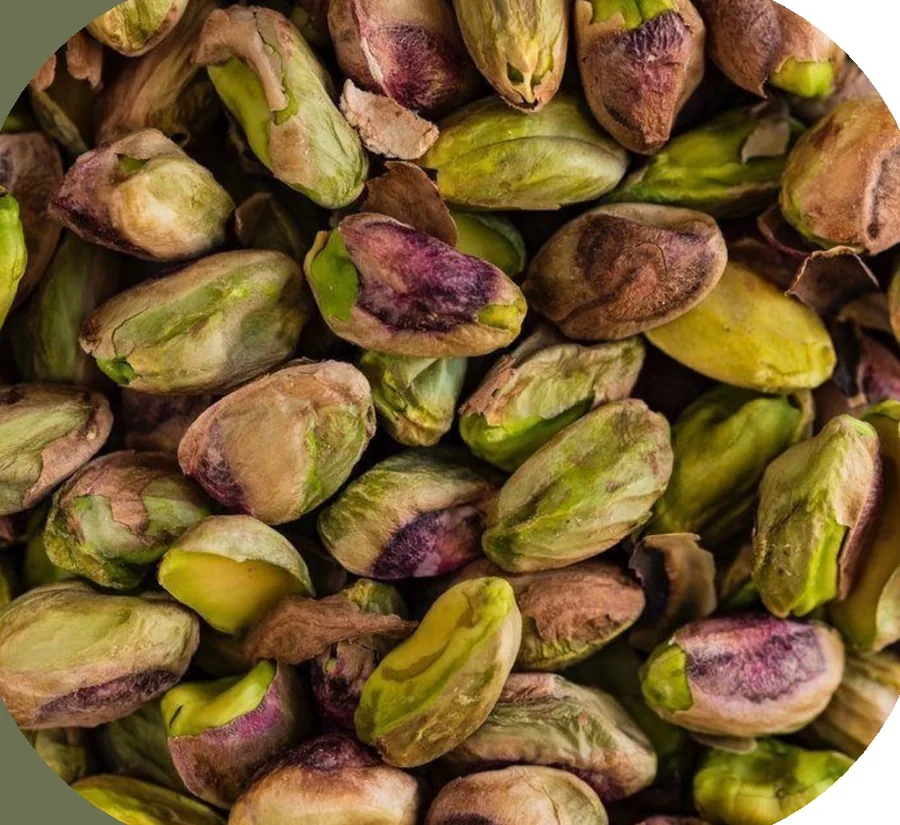
Antep pistachios are typically small, long and slim. Iranian pistachios cover a wider range: long varieties such as Akbari and Ahmad Aghaei, and large, round ones such as Kalleh Ghoochi and Fandoghi. Iranian lots are often sold in the bigger size grades, such as 20–22 or 22–24 nuts per ounce, which is why they are popular for in-shell snacking and gift boxes.
Kernel colour
Antep pistachios are famous for their intensely green kernels, especially the early-harvested green kernel used by baklava makers. Iranian kernels range from green to yellow-green, often with a purple skin. Among Iranian varieties, Ahmad Aghaei has the greenest kernel and is the usual choice of pastry chefs who want Iranian supply.
Flavour and how they are eaten
Antep pistachios have a concentrated, aromatic flavour and are the classic pistachio of Turkish desserts: baklava, künefe, kadayıf and ice cream. Iranian pistachios are rich and buttery, and are most often enjoyed in the shell, roasted and salted or roasted with saffron. A high share of naturally open shells makes them easy to snack on.
Which one should you choose?
- For in-shell snacking and hosting: large Iranian pistachios such as Kalleh Ghoochi, roasted & salted.
- For gift boxes and premium tables: long, elegant Akbari.
- For baklava and desserts where colour matters most: very green kernels, such as early-harvest Antep kernels or Iranian Ahmad Aghaei kernels.
- For roasted & salted products at volume: uniform Iranian Fandoghi.
The short answer
There is no single winner. Antep pistachios lead in Turkish confectionery; Iranian pistachios lead in large, open, in-shell snacking pistachios. The best choice depends on how you will use them. Whatever you buy, check the size grade, the open-shell rate and the kernel colour, as explained in our pistachio quality guide.